Rick E Berger, PhD
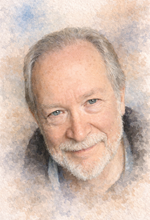
Chasing signals in noise since 1976…
Rick E Berger, PhD is an Experimental Social Psychologist and Anomalous Cognition researcher, known for pioneering automated ganzfeld (“autoganzfeld”) instrumentation, rigorous methodological critiques, cross-domain research at the interface of social psychology (expectancy, group processes), and bioelectromagnetics. Computer software/systems developer since 1976, website design, SEO (search engine optimization), internet marketing and currently Artificial Intelligence (AI). Currently developing AI-assisted protocol and clinical experiments to enable home-based, clinically-supervised, BiPAP therapy optimization.
chronicle
Rick E. Berger trained as an experimental social psychologist (PhD from Virginia Commonwealth University, 1981). He went on to investigate exceptional human abilities (Anomalous Cognition) full-time in 1981 at the Psychophysical Research Laboratories (PRL), Princeton NJ (created and funded in 1979 by James S. McDonnell, founder of McDonnell Douglas). There, working with Charles Honorton, he developed the first fully automated ganzfeld system and helped deploy the PsiLab ][ Apple-][–based platform with a dedicated hardware random number generator (RNG) to secure randomization and sealed data paths. He later continued at the Science Unlimited Research Foundation (SURF), publishing psi experiments and forensic critiques of widely cited “ESP” series. Berger has served the Parapsychological Association (Program Chair, Board of Directors, website), and collaborated on target-set forensics (PRL autoganzfeld distributions) and bioelectromagnetics.
Automated Turnkey Systems Development, Web Development, SEO, Internet Marketing, Laboratory Research
- Gerontology Research Center, NIA/NIH (1976-1979): Designed and built transportable microprocessor-controlled automated psychological testing machines for studying memory and aging effects.
- Virginia Commonwealth University (VCU)/Medical College of Virginia (MCV) (1979-1981):
- (VCU): Conducted doctoral dissertation “Heart Rate, Arousal, and the ‘Mere Presence’ Hypothesis of Social Facilitation.“
- (MCV): Developed a novel software/hardware interface to control a Nicolet Signal Processor for Department of Gerontology laboratory.
- Psychophysical Research Laboratories (PRL), Princeton, NJ (1981–1985)
- Developed a fully automated “ganzfeld” experiment testbed standardizing target randomization, stimulus delivery, blind judging, and session logging to reduce cueing/experimenter effects.
- Coordinated a transportable, Apple-][–based platform with a noise-based hardware RNG for high-entropy target selection and sealed data trails.
- Conducted and published studies on waking telepathy and micro-psychokinesis using hardware random number generators (RNGs).
- Authored/assisted with technical descriptions and updates that later informed meta-analyses and cross-lab comparisons.
- Princeton Microware Consultants (Owner: 1981-1985)
- Produced commercial software for Apple ][ computers.
- Built laboratory automation system for Johnson & Johnson chemistry lab.
- Science Unlimited Research Foundation (SURF), San Antonio, TX (1985–1989)
- Methodology & critiques: Published a widely cited, detailed audit of Susan Blackmore’s ESP corpus, A Critical Examination of the Blackmore Psi Experiments (1989, JASPR), and examined other “negative” datasets (e.g., Spinelli).
- Feedback & performance: Ran studies on psi outcomes using hardware RNGs with vs. without real-time feedback; explored subject variables as moderators and experimenter effects.
- OpTech Corporation (1989-1996): Senior Research Scientist for US Air Force, Brooks Air Force Base, Directed Energy Bioeffects Laboratory.
- Helped design one of the US Air Force’s first websites.
- Designed and built five automated experimental testing systems for studying biological effects of nonionizing radiation exposure, automated animal weighing and databasing system.
- Designed software systems to run two large scale long-term experiments on the biological effects of exposure to microwave radiation.
- Created the first hardware/software system for visualizing a microwave field in 3D space.
- Conducted Requirements Analysis project.
- Shell/Texaco (1997): Houston, TX. Led Y2K Remediation Project (“Magellan Project”).
- The Psychological Corporation (1998): Conducted Requirements Analysis project.
- Innovative Software Design (Owner; 1997-present): Computer consultant, website design, SEO, internet marketing, AI.
- InCorp Services, Inc. (2006 – 2018): Served as Director of Inbound Marketing, website developer, team manager.
Research Areas
Human Consciousness
- Automation & auditability: RNG-based randomization, computer-controlled presentation, sealed logs, and a priori analyses.
- Protocol refinement: Feedback timing, “first-session effects,” participant selection, and dynamic (video) targets within ganzfeld.
- Metascience & critique: Forensic re-analysis of “negative” datasets (Blackmore; Spinelli) and target-selection pipelines.
Social Psychology
Training in social psychology informed Berger’s approach to experimental control/interpretation:
- Expectancy & demand characteristics: Identifying and neutralizing bias via blinding and automation.
- Group processes: Cohesion, conformity, and suggestion as latent variables that can mimic anomalous effects.
- Methodological transfer: Manipulation checks, preregistration, and protocol fidelity applied to psi studies.
Bioelectromagnetics
Interface of psychology and biophysics, focusing on environmental EM/geomagnetic correlates:
- Geomagnetic covariates: Quieter annual geomagnetism associated with larger psi effect sizes over multi-decade windows.
- Moderation (not mechanism): Considered bioelectrical/biophysical pathways as moderators rather than primary causes.
Methodological Innovations & Standards
- Full automation: Reduced human handling and sensory cues; standardized protocols across sessions/labs.
- Hardware entropy: Noise-based RNGs for target selection; sealed data paths; time-stamped audit trails.
- Blind judging & dynamic targets: Video targets and computer-guided judging to address leakage and rater effects.
- Quality culture: Emphasis on preregistered analyses, manipulation checks, and transparent reporting.
Collaborations & Cross-Domain Work
- Target-set forensics: With D. J. Bierman & R. S. Broughton (1999), re-examined the PRL autoganzfeld target distributions and randomization integrity.
- Bioelectromagnetics: With M. A. Persinger (1991), analyzed relations between geomagnetic quietude and reported psi effect sizes.
- Software/UX: Led software engineering and UX initiatives (Innovative Software Design) for research tooling and archival infrastructure.
Impact & Legacy
Novel Turnkey Hardware/Software Systems
Motto: “if it requires a manual, then it wasn’t designed properly.”
- 1976-1979: Designed and built two transportable psychological testing machines for the National Institutes of Health to study aging populations in their own homes. Technology involved programming microprocessors in assembly language and designing the systems to conduct sophisticated concept-learning experiments and storing the digital data to cassette tapes for later analysis.
- 1981-1985: Created the “Autoganzfeld” hardware/software system that shifted ESP testing from bespoke, human-handled setups to auditable, computerized systems that influenced later standards, meta-analyses, and replications. Still recognized as one of the best experimental protocols in the field of Anomalous Cognition.
- 1981-1985: Project Coordinator for the development of PsiLab ][, a transportable software hardware system for testing Anomalous Cognition, ultimately distributed to 17 laboratories worldwide. The system included a highly developed hardware random number generator (RNG), a variety of automated experiments that controlled administration of experiments, data collection and included statistical analysis software built in.
- 1983: Built a turnkey laboratory automation system for Johnson & Johnson chemistry lab. System included a thermistor to A/D sample chemical temperatures and statistically evaluate “temperature rise rates” during heating.
- 1984: Produced the “Prewrite” commercial software program for Apple ][ computers.
Special Skills/Knowledgebase
- Forensic critiques of prominent “null” datasets reframed debates on replication, study quality, file-drawer effects, and analytic transparency.
Internet Guru
- From 2000-present created dozens of highly Google-ranked websites for businesses and nonprofits
- Through PA leadership, editorial work, and web infrastructure, helped sustain coordination, archival access, and public engagement.
Bibliography
Journal Articles & Major Publications
- Berger, R. E. (1988). Psi effects without real-time feedback. Journal of Parapsychology, 52, 1–27.
- Berger, R. E. (1989a). A critical examination of the Blackmore psi experiments. Journal of the American Society for Psychical Research, 83, 123–144. (Book review)
- Berger, R. E. (1989b). A critical examination of the Spinelli dissertation data. Journal of the Society for Psychical Research, 56, 28–34.
- Honorton, C., Berger, R. E., Varvoglis, M. P., Quant, M., Derr, P., Schechter, E. I., & Ferrari, D. C. (1990). Psi communication in the ganzfeld: Experiments with an automated testing system, and a comparison with a meta-analysis of earlier studies. Journal of Parapsychology, 54(2), 99–139.
- Bierman, D. J., Broughton, R. S., & Berger, R. E. (1998). Notes on random target selection: The PRL autoganzfeld target and target set distributions revisited. Journal of Parapsychology, 62(4), 339–350.
Exceptional Human Consciousness Research: Convention Proceedings
- Berger, R. E., & Honorton, C. (1985). PsiLab ][: A standardized psi-testing system. In R. A. White & J. Solfvin (Eds.), Research in Parapsychology 1984 (pp. 68–71). Metuchen, NJ: Scarecrow Press.
- Berger, R. E., & Honorton, C. (1986). An automated psi ganzfeld testing system. In R. A. White & J. Solfvin (Eds.), Research in Parapsychology 1985 (pp. 85-88). Metuchen, NJ: Scarecrow Press.
- Berger, R. E., Schechter, E. I., & Honorton, C. (1986). A preliminary review of performance across three computer psi games. In D. H. Weiner & D. I. Radin (Eds.), Research in Parapsychology 1985 (pp. 1-3). Metuchen, NJ: Scarecrow Press.
- Berger, R. E. (1987a). Psi effects without real-time feedback using a PsiLab ][ video game experiment. In D. H. Weiner & R. L. Morris (Eds.), Research in Parapsychology 1986 (pp. 6-9). Metuchen, NJ: Scarecrow Press.
- Berger, R. E. (1987b). Psi effects without feedback: Will the real psi source please stand up? In D. H. Weiner & R. D. Nelson (Eds.), Research in Parapsychology 1986 (pp. 9-12). Metuchen, NJ: Scarecrow Press.
- Berger, R. E. (1988a). Psi effects without real-time feedback. In D. H. Weiner & R. L. Morris (Eds.), Research in Parapsychology 1987 (pp. 14-17). Metuchen, NJ: Scarecrow Press.
- Berger, R. E. (1988b). In search of “psychic signatures” in random data. In D. H. Weiner & R. L. Morris (Eds.), Research in Parapsychology 1987 (pp. 81–85). Metuchen, NJ: Scarecrow Press.
- Honorton, C., Barker, P., Varvoglis, M., Berger, R., & Schechter, E. (1986). First-timers: An exploration of factors affecting initial psi ganzfeld performance. In D. H. Weiner & D. I. Radin (Eds.), Research in Parapsychology 1985 (pp. 1-3). Metuchen, NJ: Scarecrow Press.
- Honorton, C., Berger, R. E., Varvoglis, M. P., Quant, M., Derr, P., Hansen, G. P., Schechter, E., & Ferrari, D. C. (1990). Psi ganzfeld experiments using an automated testing system: An update and comparison with a meta-analysis of earlier studies. In L. A. Henkel & J. Palmer (Eds.), Research in Parapsychology 1989 (pp. 25-35). Metuchen, NJ: Scarecrow Press.
Social Psychology
- Forsyth, D. R., & Berger, R. E. (1981). The effects of self-serving vs. other-serving claims of responsibility on attraction and attribution in groups. Social Psychology Quarterly, 44(1), 59–64.
- Forsyth, D. R., & Berger, R. E. (1982). The effects of ethical ideology on moral behavior. Journal of Social Psychology, 117(1), 53–56.
Geophysical Correlates / Bioelectromagnetics
- Berger, R. E., Frei, M. R., & Jauchem, J. R. (1991). Computer-based monitoring of thermoregulatory responses of anesthetized rats exposed to radiofrequency radiation. Bioelectromagnetics 19(1): 20-31.
- Berger, R. E., & Persinger, M. A. (1991). Geophysical Variables and Behavior LXVII: Quieter annual geomagnetic activity and larger effect size for experimental PSI (ESP) studies over six decades. Perceptual and Motor Skills, 73, 1219–1223.
- Frei, M. R., Jauchem, J. R., & Berger, R. E. (1991). Circulatory shock during superficial heating with millimeter waves. In Interactions of the Endocrine and Cardiovascular Systems in Health and Disease. San Antonio, TX, United States.
- Frei, M. R., Ryan, K. L., Berger, R. E., & Jauchem, J. R. (1995). Sustained 35-GHz radiofrequency irradiation induces circulatory failure. Shock, 4(4), 289–293.
- Ryan, K. L., Frei, M. R., Berger, R. E., & Jauchem, J. R. (1996). Does nitric oxide mediate circulatory failure induced by 35-GHz microwave heating? Shock, 6(1), 71–76.
- Frei, M. R., Berger, R. E., Dusch, S. J., Guel, V., Jauchem, J. R., Merritt, J. H., & Stedham, M. A. (1998). Chronic exposure of cancer-prone mice to low-level 2450 MHz radiofrequency radiation. Bioelectromagnetics, 19(1), 20–31.
- Frei, M. R., Jauchem, J. R., Dusch, S. J., Merritt, J. H., Berger, R. E., & Stedham, M. A. (1998). Chronic, low-level (1.0 W/kg) exposure of mice prone to mammary cancer to 2450 MHz microwaves. Radiation Research, 150(5), 568–576.
- Mason, P. A., Escarciga, R., Doyle, J. M., Romano, W. F., Berger, R. E., & Donnellan, J. P. (1997). Amino acid concentrations in hypothalamic and caudate nuclei during microwave-induced thermal stress: Analysis by microdialysis. Bioelectromagnetics, 18(3), 277–283.
- Ryan, K. L., Frei, M. R., Berger, R. E., & Jauchem, J. R. (1993). Inhibition of nitric oxide synthesis during hypotension induced by 35-Ghz radiofrequency irradiation of anesthetized rats. In Fifteenth Annual Meeting of Bioelectromagnetics Society, Los Angeles, CA, United States.
Books Edited
- Henkel, L. A., & Berger, R. E. (Eds.). (1989). Research in Parapsychology 1988. Metuchen, NJ: Scarecrow Press / Rowman & Littlefield. (Edited volume).
Service & Roles
- Parapsychological Association (PA): Full Member (since 1981); Program Chair (1988, Montreal); Board of Directors (2004–2010).
- Editorial & Infrastructure: PA newsletter (past); PA website design/maintenance (2000–2010); conference program coordination.
